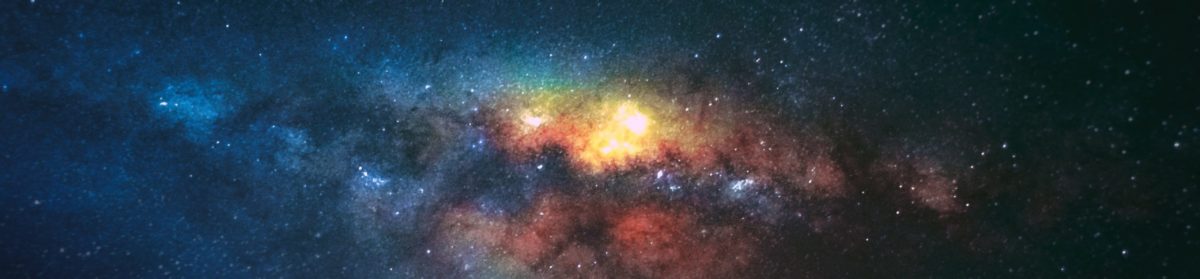
What if the sprawling cosmic web of galaxies, spanning billions of light years, shares striking similarities with the neural circuitry in our heads? In this video, we delve deep into recent research showing that the “cosmic filaments” binding galaxy clusters might parallel the intricate networks of neurons and synapses in our brains. Join us as we unpack how these two vastly different scales—microscopic neural tissue and a universe-sized lattice of galaxies—can exhibit comparable statistical patterns, structural motifs, and even “self-organizing” behaviors. We begin by exploring why the universe looks “networked,” discussing how gravitational interactions form cosmic filaments linking superclusters. We then compare this to neural connectivity, where billions of neurons form complex circuits of short- and long-range synapses. Along the way, we examine tools like high-resolution imaging, cosmological simulations, and graph theory—methods that let us treat both the human brain and the universe as interconnected networks. We’ll see how “nodes and bridges” are crucial in each system: neurons form local clusters bridged by long axons, just as galaxies clump into clusters connected by filaments. Next, we tackle the concept of self-organization: in the brain, synaptic plasticity continually reshapes circuits based on use, while in the cosmos, gravitational collapse sculpts voids and filaments from early quantum fluctuations. We also discuss information theory, where the brain balances order and entropy during perception and learning, while the cosmos develops “local pockets of order” (galaxy clusters) in a largely expanding universe. Finally, we address the hotly debated notion of “cosmic consciousness”—whether the universe “thinks” as a brain does or whether these parallels simply highlight universal design principles in nature, rather than any form of cosmic mind. If you’re curious about how cutting-edge simulations, entropy analyses, and network science bridge neuroscience and astrophysics, this video is for you. Get ready to see both the cosmos and your own brain in a whole new light! Don’t forget to like and subscribe for more deep dives into the science connecting our minds to the mysteries of the universe.
Tag: (un)reality
(un)reality
Information vs. Meaning: Top Biologist & Neuroscientist Explain | Michael Levin Λ Karl Friston
Curt Jaimungal is joined by Michael Levin and Karl Friston. This conversation incorporates insights from physics and information theory, particularly regarding self-organization and the significance of entropy and free energy.
The nature of reality – With Darius J. Wright
Darius J. Wright explains how he started to have out of body experiences since childhood, and how he experiences the other side. He explains what the different dimensions are beyond our 3D reality, and how our memory has been erased to make us forget where we are and who we are as souls. His website: https://dariusjwright.com/my-mis…
A Book So Dangerous It Exposes the Hidden War on Intelligence (no bs)
Everything is energy. Are you highly intelligent but feel trapped, misunderstood, or disconnected from the world? You’re not alone. Society wasn’t built for deep thinkers—it was designed to reward mediocrity, suppress critical thought, and keep the most capable minds distracted, isolated, and financially dependent. In this video, we uncover the hidden war on intelligence, breaking down the three key ways society suppresses high-IQ individuals, why The Curse of the High IQ by Aaron Clarey explains this phenomenon, and most importantly—how to escape ‘The IQ Trap’ and leverage your intelligence for true success.
The Subtle Art of Losing Yourself – Full Life Changing Documentary
Uncover the astonishing lessons wild places can teach about the secrets of the human mind and our place in the universe…
Consciousness and psychedelics | Peter Sjostedt-H | TEDxTruro
Philosopher of mind Peter Sjöstedt-H discusses the hidden impact psychedelics have had on philosophy and asks if such extreme, altered modes of mind could help give us answers to some of the big questions facing the philosophers and scientists of today. Peter is an Anglo-Scandinavian philosopher of mind and author. He lives in West Cornwall and is engaged in his PhD with the University of Exeter, where he also teaches philosophy modules and writing skills. Peter is the inspiration behind the inhuman philosopher Marvel Superhero, Karnak. This talk was given at a TEDx event using the TED conference format but independently organized by a local community. Learn more at https://www.ted.com/tedx
The AI Interview: Joe Rogan and Steve Jobs (Full)
WARNING: This is fully simulated using A.I. This video is a unique experience, as it features a simulated interview between Steve Jobs and Joe Rogan. Showcasing power of artificial intelligence such as chatGPT, LaMDA etc.
What Came Before the Big Bang? | Theory of Embedded Intelligence, Bill Mensch & Bernardo Kastrup
Could it be a coincidence that two founding fathers of modern day computing, independently from each other, are both coming with theories of consciousness that are idealist in nature? Or does a deep understanding of what computation is—and what it is not—inevitably lead away from physicalist ideas on consciousness? Previously Essentia Foundation presented the work of Federico Faggin, and now a legendary contemporary of his, computer engineer Bill Mensch, presents his Theory of Embedded Intelligence (TEI) to us. Mensch was a major contributor to the Motorola 6800 and became famous for his work on the MOS Technology 6502 CPU, a chip that, because of it’s efficiency, completely revolutionized computing in the 80’s. From Arcade halls to the Apple II and Nintendo 8 bit consoles, 6502s could be found everywhere. Even to this day the chip is still used in children’s toys and even in pacemakers and satellites. Looking back at his career, Mensch realizes that building computer chips is in essence a form of ‘embedding’ intelligence in technology, just as nature has embedded intelligence in biological systems, like humans. In his TEI model intelligence is fundamental. This raises the philosophical question of how consciousness relates to intelligence, and for this reason Bernardo Kastrup joined in on the conversation Mensch and Hans Busstra had. The value of a theory like Mensch’s is perhaps exactly that it is not philosophically fine-tuned to the terminology commonly used in philosophy of mind. By not taking the human mind and phenomenal consciousness as its departure point, but intelligence instead, Mensch arrives at a position in which the distinction between living beings and abiotic systems is less distinct. Mensch’s slides can be downloaded here: https://www.essentiafoundation.o…
Groundbreaking Consciousness Theory By CPU inventor Federico Faggin & Bernardo Kastrup
A new theory of consciousness proposes that qualia — for instance, the scent of a rose — reside in quantum fields. Federico Faggin is one of the greatest luminaries of high technology alive today. A physicist by education, he is the inventor of the microprocessor and the MOS silicon gate technology, both of which underlie the modern world’s entire information technology. With the knowledge and experience of a lifetime in cutting-edge fields, Federico now turns his attention to consciousness and the nature of reality, sharing with us his profound insights on the classical and quantum worlds, artificial intelligence, life and the human mind. In this discussion, he elaborates on an idealist model of reality, produced after years of careful thought and direct experience, according to which nature’s most fundamental level is that of consciousness as a quantum phenomenon, while the classical physical world consists merely of evocative symbols of a deeper reality.
Padmasambhava – SELF-LIBERATION THROUGH SEEING WITH NAKED AWARENESS – Dzogchen (Audiobook)
A text belonging to the same cycle as The Tibetan Book of the Dead, this instruction on the method of self-liberation presents the essence of Dzogchen, The Great Perfection, regarded in Tibet as the highest and most esoteric teaching of the Buddha. Teaching the attainment of Buddhahood in a single lifetime, this text was written and concealed by Guru Padmasambhava in the eighth century and rediscovered six centuries later by Karma Lingpa. Translated by John Reynolds.
The root text can be found here: http://www.buddhism.org/Sutras/2/Awar…